 +44 (0)203 397 7676

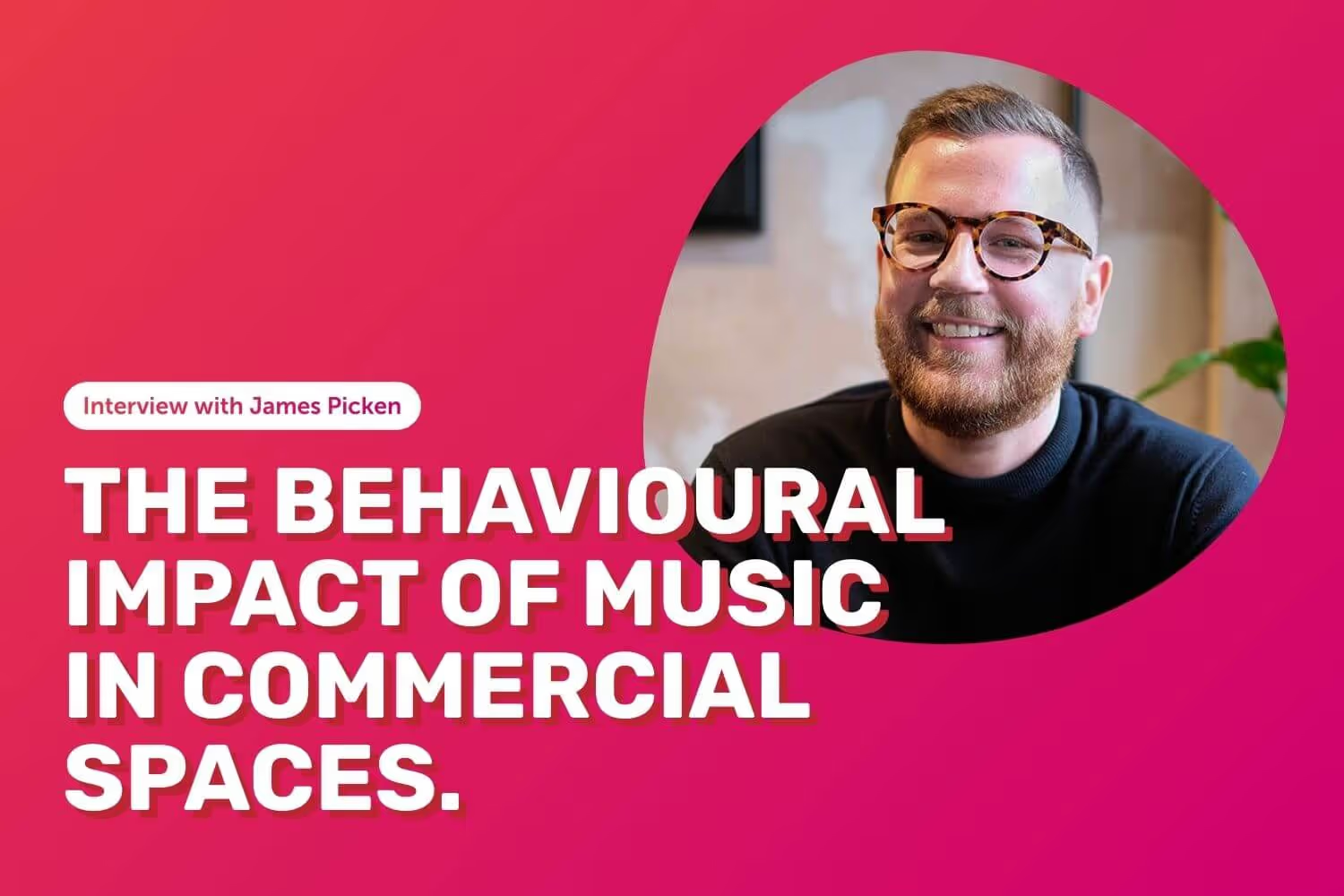
A conversation with Startle’s Creative Director on sound, science, and brand experience.
In physical hospitality and retail spaces, music is often treated as a finishing touch. Something pleasant, but really, something that fades into the background. An afterthought, if you will.
But is there more to it? We interviewed James Picken, our Creative Director at Startle, on how the blend of science and music can really shape the commercial spaces we all use and love. James explains why music deserves strategic attention and how carefully curated audio can quietly but efficiently shape behaviour, perception, and brand legacy.
At its core, my role is about helping brands understand how sound shapes experience. I oversee the creative direction of our music strategy, which means working closely with our curators, researchers, and clients to design audio environments that actually support what a business is trying to achieve.
That might involve defining a brand’s sonic identity, rethinking how music changes throughout the day, or helping a multi-site business create consistency without losing character. A big part of the work is translating research and behavioural insight into something practical and usable, so clients are not just relying on instinct or personal taste.
Ultimately, the goal is to help our customers create spaces that feel intentional. Places where the atmosphere supports their brand, their teams, and their commercial objectives, even if customers are not consciously aware of why it feels right.
Most brands are dealing with the same core pressures: fewer people coming through the door, tighter margins, and teams that are harder to recruit and retain. In that context, music can feel like a “nice to have” rather than a priority.
But what we often see is that music directly touches those pressure points in subtle ways.
From a customer perspective, it influences how long people stay, how comfortable they feel, and whether they want to return. When footfall is harder to win, experience matters more than ever. Atmosphere becomes a differentiator, not an extra.
From a staffing perspective, music plays a role in wellbeing. Staff spend hours immersed in the soundscape of a space. If it’s stressful, repetitive, or poorly suited, it contributes to fatigue and frustration. If it’s thoughtfully curated, it can genuinely improve how people feel at work.
And from a cost perspective, the reality is that music is one of the few levers brands can pull that does not require major capital investment. You are not rebuilding a store or redesigning a menu. You are optimising something that is already there, and often seeing benefits across customer experience, spend, and morale.
So while music will not fix every structural challenge, it is one of the most efficient ways to improve how a space performs without adding operational complexity.
Because when it’s done well, you don’t notice it. Music that’s working properly just becomes part of the atmosphere. It supports the space rather than demanding attention.
The problem is that this invisibility often leads people to think it doesn’t really matter. But when the music is wrong, everyone notices. People feel uncomfortable, rushed, overstimulated, or disconnected, even if they can’t quite explain why.
Music has a huge subconscious impact. It’s influencing how long people stay, how they move through a space, how they feel, and how they perceive the brand. Just because it’s subtle doesn’t mean it’s insignificant.
Commercial spaces are dynamic environments. Energy levels change hour by hour. A busy lunchtime crowd behaves very differently from a quiet mid-morning shopper or an evening restaurant guest.
Music needs to respond to those shifts. It’s not just about taste, it’s about intent. What are you trying to achieve at that moment? Encourage dwell time? Reduce stress? Support purchasing decisions? Reinforce brand identity?
There’s also a huge amount of research showing that specific musical characteristics reliably influence behaviour. Tempo, genre, rhythm, and familiarity all play a role. So while music is subjective in personal settings, its effects in shared commercial environments are surprisingly consistent.
The real work is translating that research into something practical, brand-aligned, and scalable.
It’s probably the biggest misconception we come across.
High-energy, high-tempo music doesn’t necessarily create positive energy. In already stimulating environments (full of people, visuals, movement, and noise) it can actually increase anxiety and chaos.
From a behavioural perspective, this often leads to rushed decisions, abandoned purchases, and shorter visits. Lower-tempo music tends to calm people down, slow decision-making, and encourage them to stay longer. Those factors are strongly linked to higher spend and a better overall experience.
It feels counterintuitive, but in many hospitality and retail settings, less really is more.
Algorithms are very good at grouping similar tracks based on measurable data points – tempo, genre, instrumentation, and so on.
What they struggle with is cultural relevance.
Music is a form of human communication. It carries meaning, memory, and context. What feels relevant today might not feel relevant in six months. What resonates in one city might fall flat in another. These shifts are shaped by lived experience, not metadata.
AI can help generate a pool of suitable tracks, but understanding why a song works for a specific brand, place, and moment still requires human judgement. That cultural sensitivity is critical for brands that care about how they’re perceived.
One of the most interesting projects we worked on was with DEBRA, a UK charity retailer. Initially, they came to us for consistency. Different stores were playing very different music, and not all of it aligned with the brand.
As our relationship developed, we partnered with the Royal Conservatoire of Scotland to explore whether genre alone could influence sales and staff experience. Over 21 days, we rotated pop, jazz, and classical music across stores, controlling for variables like day of the week.
Jazz significantly outperformed the other genres in terms of sales, with statistically significant results. What surprised people even more was the staff response. They reported feeling calmer, happier, and more positive at work during the jazz periods.
For a sector with limited budgets, that’s a powerful insight. A relatively simple change had a measurable impact on revenue and wellbeing.
It shows that music isn’t just about customers. It affects staff just as much.
Staff spend far more time in these environments than customers do, and music plays a big role in how they feel throughout the day. If the soundscape is stressful or mismatched, that frustration doesn’t get directed at the music, it gets directed at the employer.
When music supports wellbeing, it feeds into morale, productivity, and ultimately helps lessen staff churn.
Move beyond the idea of “nice background music”.
Sound is a strategic asset. When it’s designed with intention (grounded in research, cultural understanding, and brand identity) it quietly supports commercial goals, staff wellbeing, and long-term perception.
The best music strategies don’t draw attention to themselves. They simply make people feel better being there. And in hospitality and retail, that feeling is everything.
If you're ready to discuss the potential impact of music in your retail or hospitality spaces, book your free brand discovery call.


Ready to amplify your brand? Get in touch to find out how we can use music and tech to help you achieve your goals.
Elevate your brand with strategic music solutions, designed to build an impactful audio experience.
Amplify your brand with strategic digital signage solutions, designed to build an impactful experience.
Proactive account management, free player replacements, end-to-end support… our Relentless Support™ team are just that - relentless.
Get in touch to find out how we can use music and tech to help you achieve your goals.
Find out more about how we can use music and tech to help you achieve your goals.

With an MA in Music, an MA in Music Psychology, and a Mini MBA in Brand Management… James is one of our Startle geniuses. As Creative Director, it’s his job to produce and execute our music output, making sure everything is sounding, feeling and performing just right for our customers. When he’s not on the clock, James loves to walk the dog, read, lift weights, even dabbling in some music production, and he’s known in the office for his love of Mariah Carey.
Say hello on LinkedInReady to amplify your brand? Get in touch to find out how we can use music and tech to help you achieve your goals.
Elevate your brand with strategic music solutions, designed to build an impactful audio experience.
Amplify your brand with strategic digital signage solutions, designed to build an impactful experience.
Proactive account management, free player replacements, end-to-end support… our Relentless Support™ team are just that - relentless.
Find out more about how we can use music and tech to help you achieve your goals.
Find out more about how we can use music and tech to help you achieve your goals.
.avif) Our Favourite John Lewis Christmas Advert Songs
Our Favourite John Lewis Christmas Advert SongsJohn Lewis releases some of the most iconic Christmas adverts. We took a look at our favourites.
 What is audio branding?
Audio branding is a hot topic, and with good reason. Let's find out what it is and how retail and hospitality businesses can make it work for them.
.avif) Startle Music: October Top 10 Songs
Startle Music: October Top 10 SongsStartle’s Head of Content, James Picken, shares his Top 10 tracks to listen to this October. Discover some new artists, get inspiration for your business, or simply enjoy the playlist at home.
Get in touch to speak to our team who are ready to help you amplify your brand. We’d love to hear from you.
Startle Technologies Limited
6 Hillside Farm, Pepper Hill
Great Amwell, SG12 9FX, UK
+44 (0) 203 397 7676
Startle Technologies Limited
Harbour Buildings, Harbour
Road, Kilbeggan, N91 RXC5, Ireland
+353 1 697 2557
Startle International Inc
228 Park Ave S, PMB 88380
New York, NY 10003, USA
+1 646-585-0165


